
Why Is My Marble Floor Turning Yellow? Causes and Professional Restoration Options

A marble floor that once looked bright can slowly take on a yellow, cream, or amber cast. The change may cover most of the room or appear in patches near grout lines, wet areas, or high-traffic spots.
If you are asking why is my marble floor turning yellow, the key is that yellowing is not one single problem. Old wax, a failed coating, moisture-related discoloration, iron-related staining, residue, and years of previous maintenance can create a similar look.
Fabrizio & Sons Marble and Granite Restoration helps homeowners, property managers, and businesses in Tampa Bay and across Florida identify what is changing the stone before choosing a treatment. The right next step may be cleaning, coating removal, stain evaluation, honing, polishing, or broader marble restoration.
Important: A yellow marble floor does not automatically mean the stone needs to be replaced. The first step is finding out what is causing the color change.
Why Is My Marble Floor Turning Yellow?
Yellowing is a symptom, not one single type of damage. The color change may be sitting on top of the marble, affecting the stone itself, or connected to moisture or material below the visible surface.
A broad, even yellow cast may point toward an old surface treatment or buildup. Local yellow or brown patches may need a different diagnosis. If the floor is also dull or scratched, the color problem and the finish problem may exist at the same time.
Key Point: The color problem and the finish problem may be related, but they are not always the same thing.
What Can Cause a Marble Floor to Turn Yellow?
There is no single cause of marble floor yellowing. The stone type, finish, installation, age, moisture exposure, and maintenance history all matter.
Old Wax, Floor Finish, or a Failed Coating
Some marble floors have been treated with waxes, floor finishes, or topical coatings that sit on top of the stone. As those layers age, collect soil, or wear unevenly, they may develop a yellow or amber cast. In that case, the visible color may be coming from the surface treatment rather than from the marble itself.
Moisture-Related Discoloration
Moisture can affect how some marble floors look, especially when there is an ongoing condition around the installation. The location and pattern of the discoloration can help show whether moisture should be investigated. Surface restoration alone should not be used to hide an active moisture problem.
Important: If moisture is contributing to the yellowing, restoring the surface without addressing the source may allow the problem to return.
Iron-Related Yellow or Rust-Like Discoloration
Some yellow, orange, or brown areas may involve iron-related staining. The color alone does not prove iron is the cause. The right treatment depends on the source, age, depth, marble type, and previous care.
Residue and Years of Previous Maintenance
Built-up cleaning products, old sealers, prior polishing work, and other maintenance can change how an older marble floor looks. This is why cleaning, stripping, honing, and polishing are different processes. A floor should not be treated until the problem is understood.
Is the Marble Yellow, Stained, Coated, or Just Dirty?
Waxes and coatings may sit mainly at the surface, while a true stain or deeper color change may affect the stone itself. Normal dirt is different again and should respond to routine cleaning. These problems can look alike from across the room, but they may need very different solutions.
A yellow floor should not automatically be polished, stripped, sealed, or treated for stains. The treatment should match the actual cause.
What Not to Do When Marble Starts Turning Yellow
When normal cleaning does not change the color, stronger products can seem tempting. Marble is sensitive to acids, abrasion, and unsuitable cleaners, so the wrong product can create a second problem.
Avoid Acids, Bleach, and Harsh Floor Cleaners
Vinegar and other acidic cleaners can cause etching. Bleach and general household floor cleaners may also affect marble or an existing treatment. A cleaner that works on another floor is not automatically safe for natural stone.
Avoid Abrasive Pads and DIY Polishing
Aggressive scrubbing, Magic Erasers, abrasive pads, and DIY polishing can leave scratches, haze, or an uneven finish. The yellow color may remain while the surrounding shine becomes damaged.
Do Not Add Another Wax, Sealer, or Coating
Covering unexplained yellowing may change how the floor looks for a short time, but it does not identify the cause. It can also add another layer that may later need to be removed.
Important: Do not seal or coat over unexplained yellowing until you know what is changing the color of the floor.
What Can You Safely Do First?
Use an appropriate pH-neutral natural stone cleaner and a soft cleaning method for normal soil. Then look at the pattern. Is the yellowing across the whole floor, near a wet area, along grout joints, or limited to certain tiles?
If possible, think about whether the floor has been waxed, coated, sealed, stripped, or polished before. If normal stone-safe cleaning removes dirt but the yellow color stays, stop before moving to stronger chemicals.
Safe First Step: If normal stone-safe cleaning does not change the yellow area, the floor may need diagnosis rather than stronger cleaning.
When Should a Yellow Marble Floor Be Professionally Inspected?
Professional inspection makes sense when the cause is unclear, the discoloration keeps returning, previous cleaning attempts have failed, or the marble is also dull, scratched, hazy, or uneven.
Several causes can produce similar colors. A restoration professional can look at the stone, finish, wear pattern, moisture exposure, and maintenance history before recommending treatment.
How Professionals Diagnose Yellow Marble Floors
Professional stone care begins with the diagnosis. Fabrizio & Sons evaluates the color pattern, surface finish, wear, previous maintenance, and signs that a wax, coating, stain, or moisture condition may be involved.
The goal is not only to ask how to remove the yellow color. It is also to determine what appears to be causing it and whether the surrounding finish needs restoration.
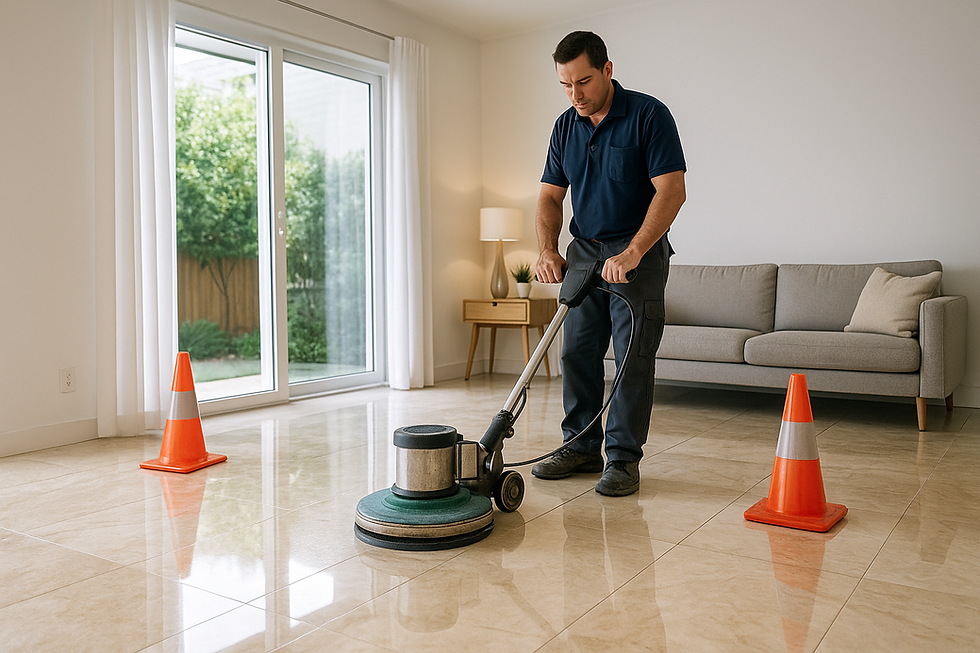
What Professional Yellow Marble Floor Restoration May Include
There is no single “yellow marble fix.” The service should match the cause and the condition of the floor.
Removing Failed Wax or Coatings When Appropriate
If an old wax or topical coating is contributing to the yellow appearance, professional removal may be part of the restoration. The marble can then be reassessed before the next step is chosen.
When Coating Removal May Help
If the yellow cast is mainly coming from a surface layer, removing that layer may reveal the actual condition of the marble. Not every yellow floor has a coating, so removal should not be assumed.
Treating Discoloration When Possible
Some stains and discoloration may respond to professional treatment, while others may only improve. Results depend on the cause, depth, age, stone, moisture exposure, and previous care.
Honing and Polishing the Marble
Honing refines and smooths the marble surface and may help when the floor also has dullness, light scratches, or worn areas. Polishing can then bring a polished floor back toward the desired level of shine.
When Honing and Polishing May Help
Honing and polishing can restore a worn or damaged finish, but they are not automatically the right treatment for a deeper stain or discoloration coming from within the stone.
Sealing When the Stone Needs It
After restoration, sealing may be recommended when it is appropriate for the marble and installation. A suitable penetrating sealer can help reduce absorption and the risk of some stains. It does not remove existing discoloration or prevent acids from causing etching.
Important: The goal is to correct the cause and restore the stone appropriately, not simply make the floor shiny enough to hide the problem.
Can a Yellow Marble Floor Be Restored to Its Original Color?
Many yellowed marble floors can be improved, but the result depends on what caused the change and how deeply it affects the stone. Surface buildup and removable coatings may offer different options than deep staining or an ongoing moisture-related condition.
Some discoloration may remain. Professional restoration should aim for the best safe improvement the stone will allow, not promise a perfect or permanent result. Photos can help show the problem, but an on-site evaluation often gives a better picture of the finish, coating, and depth of discoloration.
Restore the Marble or Replace the Floor?
Yellowing alone should not make you assume the marble floor needs to be removed. If the stone is structurally sound, restoration may be worth exploring first. Old surface treatments, buildup, finish wear, and some forms of discoloration may be improved without replacing the floor.
Before removing an existing marble floor, find out whether professional restoration can improve the stone you already have.
How to Help Prevent Marble Floor Yellowing After Restoration
Use stone-safe cleaning products, avoid unnecessary waxes or topical products, clean spills and standing moisture promptly, and follow the maintenance plan recommended for the specific stone and finish.
A polished residential floor and a high-traffic lobby may need different care. Good maintenance helps preserve the finish and can make new problems easier to spot early.
Yellow Marble Floors in Tampa Bay and Florida Homes
Marble is used throughout Tampa Bay and Florida in homes, condos, hotels, lobbies, and other high-value spaces. These floors can have very different ages, finishes, traffic levels, and maintenance histories, so the restoration plan should be based on the actual installation rather than a one-size-fits-all treatment.
For marble restoration in Tampa Bay or elsewhere in Florida, Fabrizio & Sons can evaluate the stone and explain whether cleaning, coating removal, stain treatment, honing, polishing, sealing, or broader restoration may be appropriate.
When to Call Fabrizio & Sons About a Yellow Marble Floor
If your marble floor has yellow, amber, orange, or uneven discoloration that does not improve with normal stone-safe cleaning, consider having it evaluated before applying another cleaner, wax, sealer, or coating.
Fabrizio & Sons Marble and Granite Restoration can identify the likely issue and recommend an appropriate next step for the marble you already have.
Before You Replace It: Find out whether the yellowing is coming from the marble, a stain, moisture, old maintenance products, or a failed surface treatment. The right diagnosis should come before the restoration.
FAQs About Yellow Marble Floors
Why is my marble floor turning yellow?
A marble floor may turn yellow because of old wax or coatings, moisture-related discoloration, iron-related staining, residue, or years of previous maintenance. Similar colors can come from different causes, so the condition should be identified before treatment.
Can yellow marble be made white again?
Some yellowing can be greatly improved, especially when it involves a removable surface layer or restorable finish. Deeper discoloration may respond differently. The result depends on the cause and depth.
Can wax make a marble floor turn yellow?
Yes. Some older waxes or topical finishes can change appearance over time and develop a yellow or amber cast. The surface should be identified before removal or refinishing.
Does moisture cause marble to turn yellow?
Moisture can be associated with some discoloration patterns, but yellowing alone does not prove moisture is the cause. An ongoing moisture condition should be investigated before relying only on surface restoration.
Can iron in marble cause yellow or brown stains?
Iron-related discoloration can be one possible cause of yellow, orange, or brown marks. The color alone is not enough to confirm it, and treatment depends on the source and stone condition.
Will polishing remove yellow stains from marble?
Not always. Polishing restores the finish and shine, but it is not automatically a stain-removal process. A deeper stain or coating problem may need a different treatment first.
Should I use bleach on yellow marble?
No. Bleach and other harsh household products are not a good first step for an unidentified marble problem. Use routine pH-neutral stone care and seek evaluation if the yellowing remains.
Does a yellow marble floor need to be replaced?
Not necessarily. Yellowing alone does not mean the floor is ruined. If the marble is structurally sound, professional restoration may be worth considering before replacement.
Who restores yellow marble floors in Tampa Bay?
Fabrizio & Sons Marble and Granite Restoration provides marble and natural stone restoration services in Tampa Bay and across Florida. Depending on the condition, service may include inspection, coating removal when appropriate, stain evaluation, honing, polishing, sealing, and broader floor restoration.


Comments