
Uneven Marble Floor Tiles: What Causes Lippage and How Professionals Level the Surface

You may notice it while walking barefoot across your marble floor. One tile edge feels a little higher than the next. A shoe catches. A cleaning tool bumps over the edge. Light reflects across the floor and makes some tiles look uneven.
This height difference between nearby tile edges is called lippage.
Professional marble floor lippage removal can often improve a stable stone floor by carefully reducing high areas, then honing and polishing the marble to restore a smoother, more even finish.
But not every raised tile should be ground down.
Fabrizio & Sons Marble and Granite Restoration first looks at the stone, the floor, and the cause of the uneven area. A tile that was installed slightly high is different from one that has become loose, cracked, or raised because something underneath has changed.
Important: Polishing can improve the shine of marble, but polishing alone does not level raised tile edges.
What Is Marble Floor Lippage?
Lippage means one tile edge sits higher than the tile beside it.
Instead of feeling like one smooth floor, the surface has small ridges where the tiles meet.
Some differences may be very slight. Others are easier to see or feel.
What Lippage Looks and Feels Like
Many homeowners notice uneven tile edges before they ever hear the word lippage.
You may feel a ridge with your foot. A shoe may catch on an edge. A mop or cleaning tool may bump across certain joints.
The problem can also be easy to see on polished marble.
A smooth polished floor reflects light across the room. When one tile is higher than the next, that reflection may break at the edge and make the floor look less even.
Lippage Is Different From a Loose or Moving Tile
This difference matters.
A marble tile may sit higher because it was installed that way. That can be true lippage.
But a tile can also become raised because it is loose, moving, poorly supported, cracked, or affected by a problem below the surface.
If the tile rocks, shifts, has cracked grout around it, or seems different from the surrounding floor, it should be inspected before anyone starts grinding.
Important: A raised marble edge should be diagnosed before it is ground. The goal is to correct the right problem, not simply remove stone.
Why Uneven Marble Tile Edges Can Be a Problem
Lippage is often noticed because of appearance, but it can affect more than the way the floor looks.
Raised Edges Can Catch Shoes and Feet
A more noticeable raised edge can catch a shoe or be uncomfortable under bare feet.
Depending on the amount of height difference and where it is located, it may also create a potential trip concern in a busy walking area.
This can matter in homes, condo buildings, hotel floors, entrances, hallways, and other spaces with regular foot traffic.
Lippage Can Make a Polished Floor Look Uneven
Marble is often chosen because of its smooth, finished appearance.
When neighboring tiles sit at different heights, light does not reflect across the floor in the same way.
Even clean marble can look uneven when raised edges interrupt the surface.
This can be especially noticeable in luxury homes, large rooms, lobbies, and areas with strong natural light.
Raised Edges May Receive More Wear
A protruding tile edge may receive more direct contact from shoes, furniture, cleaning equipment, and everyday traffic.
That does not mean every high edge will chip or become damaged.
It does mean obvious lippage is worth evaluating instead of assuming another polishing will solve it.
Lippage is not the same as dull marble. One is a height problem. The other is mainly a surface-finish problem.
What Causes Lippage in a Marble Floor?
There is no single cause for every uneven marble floor.
The right answer depends on the installation, the stone, and whether the problem has been there from the beginning or appeared later.
Unevenness From the Original Installation
Some lippage starts when the marble floor is installed.
Small differences in the setting material, the surface below the tile, tile placement, or stone thickness can leave one edge slightly higher than another.
The difference may not be obvious until the floor is polished or light begins reflecting across it.
Differences in Natural Stone Tiles
Marble is a natural material.
Tile thickness, stone condition, layout, and finish can all affect how a floor comes together.
That is one reason professional stone lippage removal should not be treated like simply sanding down a high spot.
The technician needs to consider how much material can safely be removed and how the corrected area will blend with the rest of the floor.
A Tile or Floor That Has Moved
A height difference that appears later can need a different type of attention.
A tile may be loose or poorly supported. There may be movement below it. Cracks or grout changes may also point to another issue.
In those cases, grinding the surface may not address the real cause.
Why the Cause Matters Before Restoration Begins
A stable tile that sits slightly high is different from a tile that is actively moving.
Professional inspection helps determine whether the floor is a good candidate for grinding or whether another repair should happen first.
Important: The safest repair starts by finding out why the tile is higher, not by immediately grinding the edge.
Why Normal Marble Polishing Will Not Remove Lippage
Homeowners sometimes schedule polishing because an uneven floor also looks worn or dull.
Polishing can be an important part of marble restoration, but it serves a different purpose.
Polishing Restores the Surface Finish
Marble floor polishing works on the finish of the stone.
It can improve shine, clarity, and the appearance of worn areas after the surface has been prepared correctly.
It does not normally remove a meaningful height difference between two tiles.
If an edge is physically higher, making it shinier does not make it level.
Lippage Removal Changes the Floor Plane
True lippage correction may require controlled marble floor grinding.
This carefully removes material from high areas so nearby tiles can transition more smoothly.
How much correction is possible depends on the marble, tile thickness, installation, existing damage, and condition of the floor.
What Not to Do With an Uneven Marble Floor
An uneven marble edge can look simple enough to fix by hand.
That can be misleading.
Do Not Sand Down One Edge Yourself
Marble grinding is not the same as sanding wood.
Removing material from only one spot can create a low area, change the shape of the tile, damage the edge, or leave a patch that no longer matches the surrounding finish.
A small DIY grinding attempt can turn into more visible surface damage.
Do Not Use an Aggressive Grinder or Abrasive
A handheld grinder, rough sanding disc, abrasive pad, or other aggressive tool can remove marble very quickly.
Once too much stone is removed, putting it back is not an option.
Professional grinding uses controlled equipment and a planned refinishing process.
Do Not Keep Polishing the Raised Edge
More polish will not remove the height difference.
The floor may become shinier while remaining just as uneven.
Do Not Grind a Tile That Moves
If the tile rocks, shifts, feels loose, or shows signs of cracking, have it inspected first.
The issue underneath may need attention before the marble surface is corrected.
Important: Grinding the wrong problem can remove marble without fixing why the floor became uneven.
Safe First Steps When You Notice Raised Marble Tile Edges
You do not need to start experimenting with products or tools.
A few simple observations can help before a professional inspection.
Look Across the Floor From a Low Angle
Light can make lippage easier to see.
Looking across the surface instead of straight down may show where reflections break at raised edges.
This can also help you see whether the problem is limited to one area or appears across much of the room.
Notice Whether the Tile Moves
Pay attention during normal use.
If a tile seems to rock, shift, or move, mention that when requesting an inspection.
Cracked grout or nearby cracks can also be useful information.
Keep Cleaning Simple
Continue using a pH-neutral cleaner made for natural stone and a soft cleaning method.
Stronger cleaners cannot level the floor.
Acidic or abrasive products may only create new damage to the marble finish.
Avoid Grinding, Filling, or Coating the Edge
Do not try to hide a raised edge with filler or cover the problem with a coating.
The floor should first be evaluated so the actual cause can be identified.
When Marble Floor Lippage Removal May Make Sense
Professional grinding may be appropriate when the tiles are stable and the unevenness can be safely reduced.
An inspection should come first.
The Floor Should Be Evaluated Before Grinding
A stone restoration professional may look at the marble type, existing finish, tile thickness, amount of lippage, cracks, chips, floor layout, and tile stability.
The goal is to understand both the visible problem and the condition of the floor around it.
When Grinding May Be Appropriate
Grinding may make sense when the marble tiles are stable and enough stone can safely be removed to improve the transition between neighboring tiles.
The amount of correction can vary from floor to floor.
The goal is a smoother and more uniform surface, not a promise that every installation can be made perfectly flat.
When Grinding Is Not the First Step
A loose, moving, unsupported, or severely cracked tile may require another repair before surface grinding.
Some floors may also have installation conditions that limit how much material can safely be removed.
The goal is not to grind every raised edge. The goal is to determine whether the floor can safely be brought into a smoother, more uniform plane.
How Professional Marble Floor Lippage Removal Works
Fabrizio & Sons Marble and Granite Restoration provides professional grinding, honing, polishing, and natural stone restoration for uneven marble surfaces.
The exact process depends on what the inspection shows.
The Floor Is Inspected First
Before grinding begins, the floor needs to be evaluated.
The technician looks for true lippage, moving tiles, cracks, chips, previous repairs, and other conditions that could affect the work.
The stone and existing finish also matter.
The Surrounding Area Is Prepared
Professional stone restoration requires controlled work.
Nearby surfaces are protected as needed so the restoration can be performed carefully and cleanly.
High Areas Are Mechanically Reduced
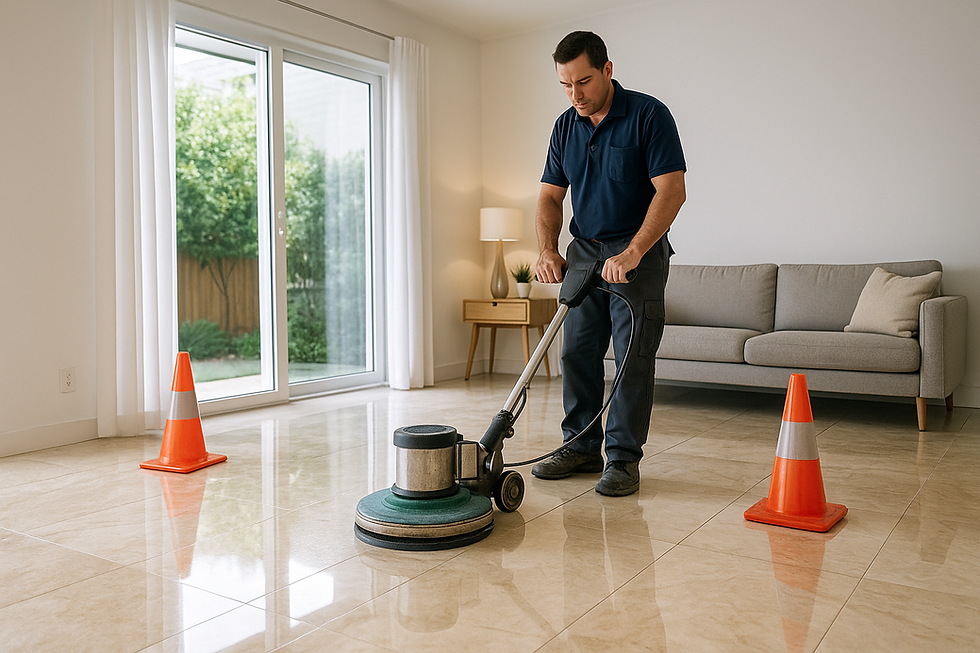
When grinding is appropriate, professional equipment is used to reduce the high areas in a controlled way.
The goal is not to attack one edge with an aggressive tool.
Instead, the surface is worked so the corrected area transitions more smoothly into the surrounding marble.
The Marble Is Honed
Grinding changes the surface of the stone.
Honing refines that surface in stages and prepares it for the final finish.
This step is important because a ground floor cannot simply be left rough and unfinished.
The Desired Finish Is Restored
After honing, the marble can be finished based on the stone and the desired appearance.
That may include a honed, softer finish or a polished surface with more reflection.
Professional marble floor polishing helps bring clarity and consistency back after the leveling work is complete.
Sealing May Be Recommended
Depending on the stone and its condition, sealing may be recommended after restoration.
A sealer can help slow the absorption of some liquids and reduce the risk of certain stains.
It does not level lippage, and it does not stop acidic substances from etching marble.
Why More Than One Tile May Need Refinishing
Sometimes the raised edge is small, but correcting only that exact spot would leave a visible difference in texture or shine.
A professional may need to refine a larger surrounding area so the corrected stone blends more naturally.
In some cases, more of the floor may benefit from honing and polishing.
That depends on the size of the problem and the condition of the existing finish.
Important: Lippage removal is usually about more than making one raised edge disappear. The surrounding marble also needs to look and feel consistent.
Can Lippage Be Removed From Just One Marble Tile?
Sometimes the problem is limited to a small area.
That does not always mean only one edge should be touched.
Small Areas Need to Blend With the Rest of the Floor
A professional may be able to address a localized area, but the restored section still needs to transition into the surrounding stone.
If one spot is ground and polished differently from everything around it, the repair may stand out.
Incorrect Spot Grinding Can Create a Low Area
Removing too much material can trade one problem for another.
Instead of a raised edge, the floor may end up with a dip or an uneven finish.
Professional marble floor lippage removal focuses on the floor plane and surrounding finish, not only the highest point.
What Results Can Professional Lippage Correction Provide?
When the floor is a good candidate, lippage removal can make the surface feel and look more uniform.
Results depend on the original installation and condition of the stone.
Smoother Transitions Between Tiles
Reducing raised edges can create smoother transitions between nearby marble tiles.
This may make the floor more comfortable underfoot and less visually uneven.
A More Consistent Finish
After grinding and honing, polishing or refinishing can help restore a more consistent appearance.
This is especially important on polished marble, where light makes surface differences easy to see.
Some Floors Have Limits
Not every floor can or should be ground to the same degree.
Tile thickness, cracks, movement, past repairs, installation conditions, and the amount of stone available can all affect what is possible.
A good restoration plan respects those limits.
What Affects the Scope of a Lippage Removal Project?
Two uneven marble floors can require very different amounts of work.
The Amount of Unevenness Matters
One small raised section is different from lippage throughout an entire room.
The number of affected tiles can change the restoration scope.
The Height Difference Matters
A slight difference may require less correction than a more noticeable ridge.
The technician still needs to determine how much stone can safely be removed.
Stone Type and Finish Matter
The marble itself affects the restoration plan.
Tile thickness, condition, existing polish, and previous restoration work may all change the process.
Cracks or Movement Matter
A floor with stable tiles is different from one with cracks, movement, or poor support.
Related problems may need to be handled before lippage correction.
The Final Finish Matters
A honed floor and a highly polished marble floor do not have the same final appearance.
The finishing process should match the floor and the owner's goals.
Can Marble Floor Lippage Come Back?
Grinding changes the stone surface, but it cannot solve every possible condition underneath the floor.
Surface Correction Does Not Stop Ongoing Movement
If a tile becomes uneven because the installation is still moving, correcting the top surface alone may not stop future changes.
That is another reason diagnosis matters.
Proper Installation Matters for New Marble Floors
For a new installation, proper preparation and careful tile setting can help reduce avoidable height differences.
Stone thickness, layout, and the surface below the tile all matter.
Regular Maintenance Protects the Finish
Routine stone care can help protect the appearance of a restored marble floor.
Use a stone-safe cleaner and avoid acidic cleaners, harsh chemicals, and abrasive pads.
Periodic honing or polishing may be useful as the finish wears over time.
Maintenance can protect the finish, but it does not correct new structural movement below the tile.
When to Call Fabrizio & Sons About an Uneven Marble Floor
If marble tile edges catch underfoot, the floor has visible ridges, or normal polishing has not solved the problem, it may be time for a professional evaluation.
The same is true when you cannot tell whether you have normal lippage or a tile that has become loose or raised.
Fabrizio & Sons Marble and Granite Restoration works with marble and other natural stone floors in Tampa Bay and throughout Florida. Professional inspection can help determine whether the floor needs grinding and lippage correction, honing, polishing, repair, sealing, or another approach.
Call Before Trying to Grind the Marble Yourself
Controlled stone removal requires the right tools and experience.
Getting an opinion first can help prevent DIY grinding from creating a larger repair.
Call If the Tile Also Moves or Cracks
A raised edge with movement, hollow areas, cracks, or failing grout deserves closer inspection.
Grinding may not be the first step.
Call Before Assuming the Floor Needs Replacement
An uneven marble floor does not automatically need to be removed.
When the stone and installation are suitable, restoration may improve the floor without replacing it.
Before grinding, covering, or replacing an uneven marble floor, ask whether professional restoration can safely create a smoother and more consistent surface.
Fabrizio & Sons Marble and Granite Restoration can evaluate the condition of your marble and explain the options clearly. If professional lippage removal is appropriate, the floor can be carefully ground, honed, polished, and protected based on the needs of the stone.
FAQs About Marble Floor Lippage Removal
What is lippage on a marble floor?
Lippage is a height difference between the edges of nearby tiles. One marble tile may sit slightly higher than the next, creating a ridge instead of a smooth transition.
Can marble floor lippage be removed?
In many cases, marble floor lippage removal can reduce raised edges through professional grinding, honing, and refinishing.
The right solution depends on tile stability, stone thickness, installation, the amount of unevenness, and how much material can safely be removed.
Will polishing remove lippage from marble?
No. Polishing changes the finish and shine of marble.
A physical height difference usually requires grinding or another repair before the floor is honed and polished.
How do professionals remove lippage from marble floors?
Professionals first inspect the floor and determine why the tiles are uneven.
If grinding is appropriate, high areas may be carefully reduced. The marble is then honed and finished so the corrected surface blends with the surrounding floor.
Can I grind down one raised marble tile myself?
DIY grinding is not recommended.
Removing too much marble can create a low area, damage an edge, or leave an uneven finish that is harder to correct.
Is a raised marble tile always lippage?
No.
A raised tile may be true lippage, but it can also be loose, moving, poorly supported, cracked, or affected by another condition below the surface.
That is why inspection should come before grinding.
Does the whole marble floor need to be refinished after lippage removal?
Not always.
The amount of refinishing depends on how much of the floor is affected and whether a smaller corrected area can blend with the surrounding marble.
In some cases, refinishing a larger section creates a more even appearance.
Is marble floor lippage a trip hazard?
More noticeable raised edges can create a potential trip concern, especially in regular walking paths.
The amount of lippage, location, and use of the space all matter.
If an uneven marble floor is catching shoes or feels uncomfortable underfoot, Fabrizio & Sons Marble and Granite Restoration can inspect the surface and help determine the safest next step.


Comments